Pink Lemonade: A Playful Handwritten Font for Creative Branding
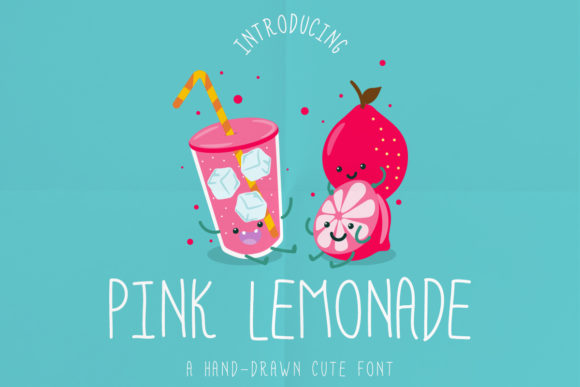
I remember staring at a blank brand board last Tuesday, trying to find the perfect personality for a new boutique skincare line. The client wanted something that felt organic, friendly, and undeniably cute without looking cheap or overly childish. I opened my font library and landed on Pink Lemonade, a Script Handwritten typeface that immediately changed the entire mood of the project. It wasn't just about picking a pretty style; it was about finding a visual voice that could carry a logo, look great on packaging, and still feel authentic when used in social media graphics.
This review isn't based on a quick glance at the character map. It is the result of actually testing this Fonts family across a realistic branding workflow, from sketching a logo concept to finalizing business card mockups. If you are looking for a creative font that brings genuine playfulness to your next crafting project, here is what I found after putting Pink Lemonade through its paces.
Pink Lemonade as a Logo Font for Boutique Identity Projects
The first time I applied Pink Lemonade to a logo draft, I was surprised by how well it handled negative space and letter spacing. As a Script Handwritten design, it has a natural flow that mimics real pen strokes, which is rare for digital fonts that often feel too rigid. When I used it as the primary logo font for a handmade jewelry brand, the curves felt inviting rather than aggressive. Unlike many display fonts that demand attention with heavy weights, Pink Lemonade invites the viewer in with its effortless handwritten charm.
I tested the kerning on various wordmarks, and the ligatures worked seamlessly to connect letters like "l" and "e" or "t" and "i." This connectivity is crucial for brand identity work because it creates a cohesive unit rather than a collection of separate characters. However, I did notice that for very small applications, like a favicon or a tiny product tag, the fine details of the script might get lost. For a logo, it shines best as a headline or a primary mark where the size allows the unique swashes to breathe. It pairs beautifully with a clean sans serif font for secondary text, creating a balanced hierarchy that feels modern yet personal.
Pink Lemonade for Packaging Design and Product Labels
Moving from the logo to the physical package, Pink Lemonade proved to be an excellent choice for crafting projects involving labels and boxes. Imagine a jar of artisanal honey or a box of handcrafted soaps; the playful nature of this Script Handwritten font adds a layer of warmth that generic typography simply cannot achieve. I created a mockup for a local bakery, and the way the font curved around the edges of a label made the product feel homemade and trustworthy.
The legibility remains surprisingly high even at smaller sizes, provided you don't crowd the text. When designing product labels, I recommend using Pink Lemonade for the brand name or key phrases like "Organic" or "Handmade," while keeping the ingredients list in a highly readable sans serif. This approach leverages the font's decorative strengths without sacrificing clarity. It transforms standard packaging into a creative font experience that customers want to photograph and share, effectively turning your product into a marketing asset.
Pink Lemonade for Social Media Graphics and Digital Content
In the world of Fonts designed for digital platforms, readability on screens is paramount. I tested Pink Lemonade on Instagram posts, Facebook banners, and website headers, and it performed admirably. The stroke weight is consistent enough to remain visible on mobile devices, which is often a struggle for delicate script typefaces. When I used it for a "New Collection" announcement on a fashion blog, the playful energy of the letters stopped the scroll better than a standard serif or bold sans serif would have.
For content creators and marketers, this font offers a distinct advantage: it humanizes your brand. Using a handwritten font in your digital assets signals that there is a real person behind the screen. Whether you are designing a quote graphic, a sale banner, or a story highlight cover, Pink Lemonade adds a touch of personality that feels authentic. Just be mindful of background contrast; since the font has varying stroke widths, ensure it stands out clearly against busy patterns or images. Pairing it with a solid color block or a subtle texture can enhance its visibility and impact.
Pink Lemonade for Wedding Invitations and Personal Stationery
While often categorized under commercial use, Pink Lemonade excels in personal design projects like wedding invitations, thank-you cards, and event signage. The soft, rounded edges of the Script Handwritten style evoke a sense of celebration and intimacy. I recently mocked up a wedding invitation suite where the names were set in Pink Lemonade, and the effect was elegant yet whimsical. It strikes a balance between formal and fun, making it suitable for modern weddings that want to avoid traditional stiffness.
When using this font for stationery, consider the paper stock. On matte or textured cardstock, the ink absorption makes the handwritten feel even more pronounced. For large events, such as a chalkboard sign or a welcome poster, the font scales well, maintaining its character even when enlarged. It is important to note, however, that for long paragraphs of body text, this font is not suitable. Its primary role is as a display font or accent typeface. Use it to grab attention, set the tone, or highlight specific information, but rely on a supporting serif or sans serif font for any detailed instructions or longer descriptions.
Pink Lemonade for Commercial Licensing and Professional Workflows
Before integrating Pink Lemonade into a final client deliverable, it is essential to review the specific licensing terms. While the font is fantastic for crafting projects and small business branding, commercial usage rights vary depending on the vendor. If you are designing for a client, ensuring you have the correct license for merchandise, print-on-demand products, or web embedding is critical to avoid legal issues. Most premium font licenses allow for end-use in logos and packaging, but some may restrict redistribution or require additional fees for large-scale digital exposure.
Additionally, check the file formats included in the download. High-quality Fonts packages should include OTF, TTF, and sometimes WOFF files for web use. Look for features like alternate glyphs, swashes, and ligatures that add variety to your designs. In my experience, having access to these alternates allows for greater customization, letting you tweak the look of a wordmark to fit perfectly within a layout. By understanding the technical capabilities and licensing boundaries, you can confidently use Pink Lemonade to brighten up your upcoming projects while maintaining professional standards.